What we offer are tips in how to dance your cares away, Fraggle Rock–style within this Studio Ghibli Holiday Guide. Burnout doesn’t have to be the final note of the year.
At the end of December, the season can feel less like a celebration and more like a rat race through consumer culture and obligation. When that happens, I like to suggest something radical in its simplicity: slow down. With this Studio Ghibli holiday guide, I’m sharing what I fallback to when looking for a way to make a full stop, destress and treat the break as it’s originally intended.
Christmas holds deep meaning for those who choose to observe its traditions. New Year’s Day carries its own rhythms and expectations as well. Still, neither should feel like a duty checked off a list. It helps to arrive to a family gathering, party or random get-together with the right intentions rather than rushing from one obligation to the next.
Across Asia, winter-solstice folklore treats the longest night as a test of humility and endurance. From Siberia’s frost bull to Japan’s snow spirits and Korea’s red-bean rituals, these traditions frame cold as a force to respect, not conquer, and renewal as something you earn.
Before electric light banished the shadows, winter across the colder reaches of Asia was a time for vigilance and reverence. The Winter Solstice—the year’s longest night—was more than an astronomical marker; it was a reminder of nature’s power and the fragile balance between survival and oblivion. Winter Solstice in Asia is looked at differently.
In many regions, stories emerged to give shape to the cold: spirits, demons, and deities who ruled when the world froze. Some brought famine, others discipline, and a few offered protection through ritual and respect. These myths were not merely superstition; they were survival guides, moral codes, and poetic reflections of human resilience. In this continuation, specific traditions will also be observed.
Though much of Asia does not celebrate Christmas, winter remains a time for remembrance, purification, and renewal—the same primal emotions that inspired Europe’s own solstice monsters.
Chysh Khan
(Sakha / Yakut Republic, Siberia)
To the Yakut people of Siberia, Chysh Khan—the “Bull of Winter”—emerges from the Arctic Ocean as the cold’s living spirit. His breath freezes rivers, his hooves mark the frost, and his retreat brings spring. Even the horns have meaning: his first horn represents the great frost and second the deep cold.
Today, he’s celebrated in Yakutian winter festivals as a personification of endurance, a being both feared and honoured. In the world’s coldest inhabited lands, he remains a god of survival.
Before Christmas and commerce, the winter solstice legends included more than the usual creatures that go bump in the night. From Krampus to the Yule Cat—there’s many more who flit in the night, to celebrate winter’s dual nature: cruel yet cleansing, dark but also full of renewal.
No list can ever be complete without mention of the first entry who—at least in terms of media appeal—pulls the reins. Out of all the darker Winter Solstice Legends, Krampus has become the most acknowledged in modern Western pop culture! Whether he is parodied or turned into a true icon of terror, the purpose varies.
That’s because of his allure and how media has embraced him as an icon for those who don’t really celebrate the modern-day notion of Christmas or just want to be anti-establishment. But there are others who exist alongside him, whom we will explore in a separate article. They all get acknowledged, whether locally or in different regions around the world.
Belsnickel
(Germany / Pennsylvania Dutch)
Clad in tattered furs, Belsnickel visits before Christmas carrying a whip and sweets. He tests children’s manners, rewarding the polite and chastising the rude. In North America, he remains part of Pennsylvania Dutch custom, a rustic, moral counterpoint to Santa Claus. As for why he’s such a fixture in this part of the United States, the best way to find out is either to go there to witness events yourself, or….
Further reading:Christmas in Pennsylvania by Alfred Shoemaker, or this report on Pennlive.com.
Before Christmas and commerce, the winter solstice legends included more than the usual creatures that go bump in the night. From Krampus to the Yule Cat—there’s many more who flit in the night, to celebrate winter’s dual nature: cruel yet cleansing, dark but also full of renewal.
Long before malls blared carols and Santa slid down chimneys, winter belonged to stranger things. From the shadowed Alps to the frozen fjords, there are other entities said to roam the land. Throughout Europe, some were mortal, others were spirits, and maybe one or two were fae. These Winter Solstice Legends existed in legend and folklore as a friend to Saint Nick, or perhaps served as a gentle reminder of Winter’s power, or perhaps why one must be kind to others!
As avatars of them perform in festivals, their true presence manifests in the songs and stories told over the warm fire. Whether in the comfort of a home or in camp, just what’s revealed keeps some thoughts safe. And in what I hope is a comprehensive list, what I offer is what I’ve learned so far about these legends.
The Caganer
(Catalonia, Spain)
Often hidden in plain sight, the Caganer turns the act of searching into part of the ritual; finding him is said to bring luck, while failing to include him invites misfortune or poor crops. His origins likely trace back to 17th- and 18th-century Catalonia, when peasant realism and earthy humour seeped into religious art as a quiet counterbalance to idealised piety.
By squatting at the margins of the holy scene, he affirms that divinity does not float above daily life but is embedded within it, bodily, messily, and without shame. In this sense, the Caganer functions as a solstice figure in disguise, anchoring cosmic renewal to manure, labour, and the cycles of the land. Modern versions depicting politicians, celebrities, and pop-culture icons extend the joke further, democratising the sacred moment and reminding everyone, saint and sinner alike, that nature makes equals of us all.
As this year comes to a close, we at otaku no culture will be taking break to recharge and resume in January.
We are wishing everyone a Happy Kaiju-sized Holiday! As this year comes to a close, we will be taking break to recharge. Postings will resume after the New Year and we will offer up lists in what to look forward to in 2023 (and play catch up on what was released the week prior).
Plus, Chinese New Year will be coming sooner than later, and we’ll glance at what’s coming for that celebration too.
In the meantime, please rock out to our favourite heavy metal song to acknowledge the coming of December 25th. We even put together a small mixtape of our favourites which can be viewed/heard on YouTube here.
Ghostly tales for the Christmas Season, a Top Ten List (well, sort of).
Scrooge and the Ghost of Christmas Past fly over the town.
In a 2017 article on Smithsonianmag.com, the plea was made to bring back the ghost story for the Christmas season. Colin Dickey wrote, “Telling ghost stories during winter is a hallowed tradition, a folk custom stretches back centuries, when families would wile away the winter nights with tales of spooks and monsters.”
Another character said, “A sad tale’s best for winter,” Mamilius proclaims in Shakespeare’s The Winter’s Tale. He added, “I have one. Of sprites and goblins.”
And the titular Jew of Malta in Christopher Marlowe’s play at one point mused, “Now I remember those old women’s words, Who in my wealth would tell me winter’s tales, And speak of spirits and ghosts by night.”
It’s a tradition I’m honouring cinematically. It’s too easy to always include Dickens’ A Christmas Carol and instead of this titular classic, I’m choosing which of the many adaptations I consider worth revisiting. This list is divided into two parts. One which mentions the holiday in the film and perhaps takes place during. The other is broader, using Winter as a metaphor. The movie has to be good. No rotten tomatoes are going to be mentioned here. Stanley Kubrick’s The Shining is mentioned far too many times and I’m going for the lesser known works.
Thanks go to Bloody Disgusting for the original list, to which I tightened the criteria because a ghost has to be crucial to the tale:
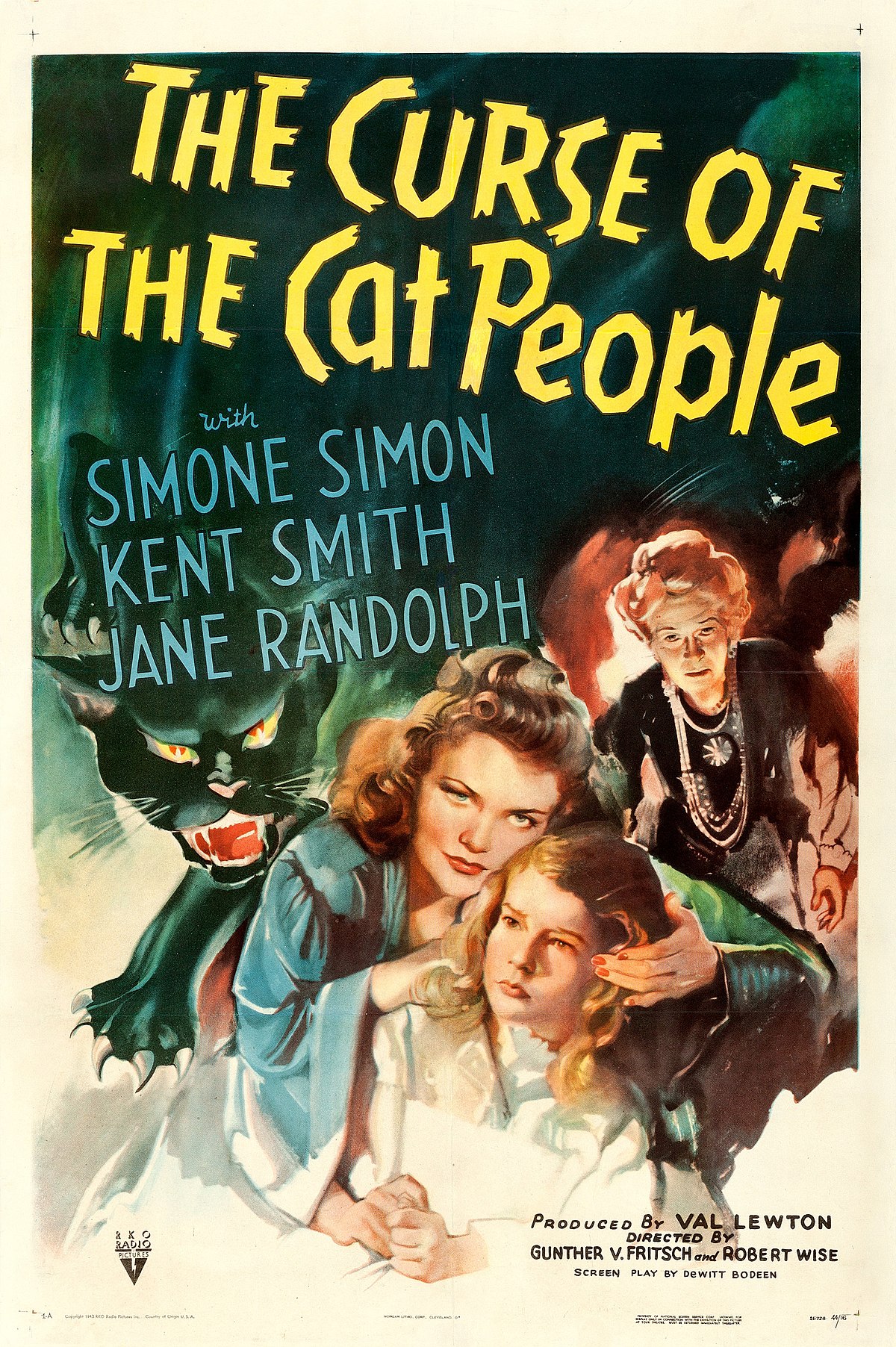
The Curse of the Cat People (1944)
This tale set during the holidays is a sequel to the original, and it’s described by Bleeding Cool as a feel-good tale rather than of pure horror. It’s a sweet coming of age tale which stars Anne Carter as Amy Reed, who befriends the ghost of her father’s first wife whom she’s never been told about.
This work is more fantasy than anything else, but it still contains the essential elements that define a ghost story.


 At the end of December, the season can feel less like a celebration and more like a rat race through consumer culture and obligation. When that happens, I like to suggest something radical in its simplicity: slow down. With this Studio Ghibli holiday guide, I’m sharing what I fallback to when looking for a way to make a full stop, destress and treat the break as it’s originally intended.
 Before electric light banished the shadows, winter across the colder reaches of Asia was a time for vigilance and reverence. The
  To the Yakut people of Siberia, Chysh Khan—the “Bull of Winter”—emerges from the Arctic Ocean as the cold’s living spirit. His breath freezes rivers, his hooves mark the frost, and his retreat brings spring. Even the horns have meaning: his first horn represents the great frost and second the deep cold.
 No list can ever be complete without mention of the first entry who—at least in terms of media appeal—pulls the reins. Out of all the darker Winter Solstice Legends, Krampus has become the most acknowledged in modern Western pop culture! Whether he is parodied or turned into a true icon of terror, the purpose varies.
 Often hidden in plain sight, the Caganer turns the act of searching into part of the ritual; finding him is said to bring luck, while failing to include him invites misfortune or poor crops. His origins likely trace back to 17th- and 18th-century Catalonia, when peasant realism and earthy humour seeped into religious art as a quiet counterbalance to idealised piety.
 We are wishing everyone a Happy Kaiju-sized Holiday! As this year comes to a close, we will be taking break to recharge. Postings will resume after the New Year and we will offer up lists in what to look forward to in 2023 (and play catch up on what was released the week prior).
 The Curse of the Cat People (1944)