

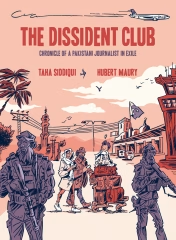
Taha Siddiqui never felt he belonged in the world his Muslim parents grew up in. Although they tried to teach them their ways, he never understood what being devout means. When his father became much more difficult to live with, life became a lot more tough. And what’s recounted in the aptly titled graphic novel, The Dissident Club: Chronicle of a Pakistani Journalist in Exile, is a deep look at what goes on in Pakistan.
Some parents allowed their kids to grow up without certain teachings engrained upon them at an early age. This author had a fleeting moment where he could read comics featuring Batman, Superman and Spider-man. He not only idolized but also wanted to be like them. But after his father looked at these books, he took them away and banned them because they represented something he deemed against the will of Allah.
While this autobiographical work is not saying his parents were terrible, they probably grew up the same way he did. Back in the early 20th century, the widespread xenophobia was most likely much worse. Also, certain countries had not yet formed. It’s safe to say those growing up during those years lived a rougher life; after World War I, this region was very unsettled. And I’m thankful the historical information included helps readers understand what went on.

In this book, the story Siddiqui presents shows how he does not want to become like his elders. Their devotion makes them headstrong, but when their kids are growing up with more global influences helping shape their lives, DJ Jazzy Jeff & The Fresh Prince’s song, “Parents just don’t understand” came to mind faster than any other examination of the generation gap.
This narrative is excellently written. Not only does it show what existence is like for a typical Muslim family, but also what’s revealed suggests not everyone wants to live this way. His thoughts suggest his father lost his focus because of the stress of suddenly having children in his life. He was not a working man until much later, and perhaps due to what his bosses believe in, so must he. Although baba (as they’re called) tried to ingrain to his sons the way early in their life, they were not 100% sold.
This book was tough to put down once when I started reading, and in order to appreciate all the details, I looked at it again. I also bookmarked important pages with post-it notes! The comic strip format beautifully illustrates key points of Taha’s life and to present the tale in a Sunday Funnies style makes the book more accessible for readers of all ages. Hubert Maury’s illustrations show the tension between father and child, and I could feel it.
But for this author, the story is a definitive peek into the mirror darkly of a world not everyone comprehends. And while readers are like a fly on the wall observing, the events which unfolded may well have a few wanting to shudder. Perhaps things will change for the better in the future. But for now, to live a peaceful life in this region is questionable at best. After this individual earned his cred as a journalist and found corruption within the ranks, it’s easy to see why he became a target.
This attack resulted in him wanting asylum as fast as possible. Since then, the real-life club he’s opened up in Paris, France offers a safe space to talk and connect, free from skepticism, and to figure out how to tell the world that not everyone from this Muslim world is bad.
5 Stars out of 5
