


What’s presented during the Victoria Fringe Festival is clearly more of a work in progress than a finished show. Another producer and proper funding can help elevate the visual elements, so what’s presented feels fuller. Even the playwright mentioned future plans, which means her take will be explored further. I’ll be glad to return to see the updated version, should it set sail, because I want to experience a full-on recreation of the environment rather than the drama itself.
At its heart, the performances are strong. Four actresses pull triple duty, playing a range of characters that includes Sir Ernest Shackleton (captain), Frank Wild (second-in-command), Lionel Greenstreet (first officer), Alfred Cheetham (third officer), Hubert Hudson (navigator) and Harry “Chippy” McNish (ship’s carpenter). There are more characters, but without a proper playbill matching each role to the performer, I won’t try to sort that out. These figures anchor a classic tale of man against nature, fighting the elements and even trying to save a cat. Instead of giving everyone equal time, the story focuses on those in command.


I’m sure the production takes a few liberties to give the adventure some lighter moments. Trimming about 10 minutes might help, since a few bits drag, especially the muddled effort to establish a timeline of who struggled to stay sane and when. I also wanted more visual detail rather than having to rely so heavily on theatre of the mind. One line of dialogue suggested Ernie didn’t make it, which made me do a double take. I do recall from other readings where the dialogue clearly says he survived. While that is good, the moment in the screenplay had me second guessing.
And for those who don’t know the story of this expedition, the crossing itself never happened, nor did the crew face the zombie penguins from At the Mountains of Madness. Yes, they came close, and that’s when I paid the most attention. And no shoggoths were harmed in the writing of this review. That said, I must note that the underlying horror is the same: the crew had to survive.
Although they never met Charon, I’d have to check the ship’s logs to see whether the Styx was ever directly mentioned since that kind of connection makes me more interested in a show rather than distract. However, I digress when examining this story through the lens of literary horror.
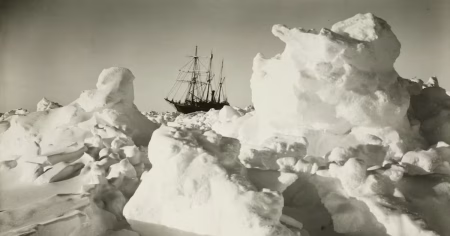

Since the backdrop and visual aids can only do so much, stronger scenic design might hammer home the metaphors. That also includes when the actresses are presenting long monologues, which I doubt would happen had this been real. And when the environment matters as much as the performances, the production needs a better balance. That way, what’s presented feels more personal and analogue. When it comes to survival, one must commit to do or die rather than decide what’s best for the crew.
I can forgive those limits in a proof of concept, especially since the story inverts a few things by having an all-female cast play male roles. With that in mind, empathy and community become more prominent than any male trying to assert himself. Compassion matters more, though part of me wanted the story to lean further into the secrets held at bay, à la Casey Walker’s Ithaqua. With that work still fresh in my mind since it successfully made the environment come alive, I carried some unintended expectations into this performance.
Had this work been framed more as survival horror, I’d probably have enjoyed the show more. As it stands, it walks a fine line, presenting more of a gender-flipped retelling of history than a tale steeped in fear and dread.
Final Show of The Ice Keeps
Sep 6 1:00 pm at SKAM Satellite Studio (849 Fort Street)
For the latest updates about this show, please visit hapaxtheatre.com/